I have owned (and loved) my HP Pavilion zt3340us notebook for the last 3 years. It had taken the excessive use and abuse of some 10+ hours/day without any significant upgrade or repair until about a year ago when it's power adapter started acting up. I promptly bought an after-market (non-OEM) replacement($45) which lasted for some 6 months before dying itself. Following another replacement of the power adapter($30) and the purchase of a brand new after-market battery($50), the power issues persisted in different forms. Particularly, the power jack was getting too loose to charge up the battery or even consistently power the notebook. For a while, I compromised the mobility of the notebook by removing the battery, but soon the loose connection started oscillating so much that it was causing overheating around the power jack connection. The overheating led to some abrupt(thermal) shutdowns and an inability to reboot the notebook for days at a time. That basically deemed the notebook useless for all purposes.
Unwilling to part with what seemed to be a notebook that still had some use, I surfed the web looking for solutions. That's when I realized the power jack problem has been all too common among certain HP/Compaq notebooks. The problem was well-documented
http://www.howtofixcomputers.com/bb/ftopic73146-0.html
http://www.notebookforums.com/thread173313.html
http://opinionatedmarketers.blogspot.com/2008/01/jacked-by-hp-power-jack-problem.html
and many unhappy customers have been scheming about a possible class-action suit against HP's defective design and its unwillingness to help repair defective notebooks or do a recall. The high incidence of the power jack problems has led to many technicians charging top dollars (~$200) to fix this problem. So, I sought my alternatives carefully:
Unwilling to part with what seemed to be a notebook that still had some use, I surfed the web looking for solutions. That's when I realized the power jack problem has been all too common among certain HP/Compaq notebooks. The problem was well-documented
http://www.howtofixcomputers.com/bb/ftopic73146-0.html
http://www.notebookforums.com/thread173313.html
http://opinionatedmarketers.blogspot.com/2008/01/jacked-by-hp-power-jack-problem.html
and many unhappy customers have been scheming about a possible class-action suit against HP's defective design and its unwillingness to help repair defective notebooks or do a recall. The high incidence of the power jack problems has led to many technicians charging top dollars (~$200) to fix this problem. So, I sought my alternatives carefully:
- Replace the whole motherboard
- CONS: A used bare motherboard (missing CPU, GPU, memory, Wifi card, fan ..) costs some $200 on eBay.
- CONS: It will probably have the same power jack issues down the road.
- Cost: ~$200
- Replace power jack myself - there is a hack
- CONS: some pieces need to be soldered, but I don't own a soldering tool
- CONS: Too invasive - notebooks are easy to screw up.
- Cost: <$50
- Get power jack replaced
- People have made a business out of this opportunity
- Cost: ~$200
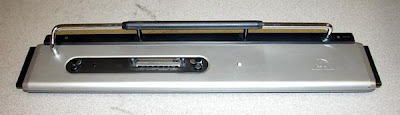
- Use a docking station
- HP docking stations have their own power inlet and they can power a whole notebooks
- COST: $20 (look on eBay like I have. MSRP is ~$180)

Comments